The Complexities of Cellular Regeneration The study of cellular healing, angiogenesis, and tissue regeneration is one of the most dynamic fields in modern biological research. To accurately map the pathways governing these processes in vitro, researchers rely on specific peptide sequences known for their signaling capabilities. Two of the most heavily researched compounds in this domain are BPC-157 and TB-500.
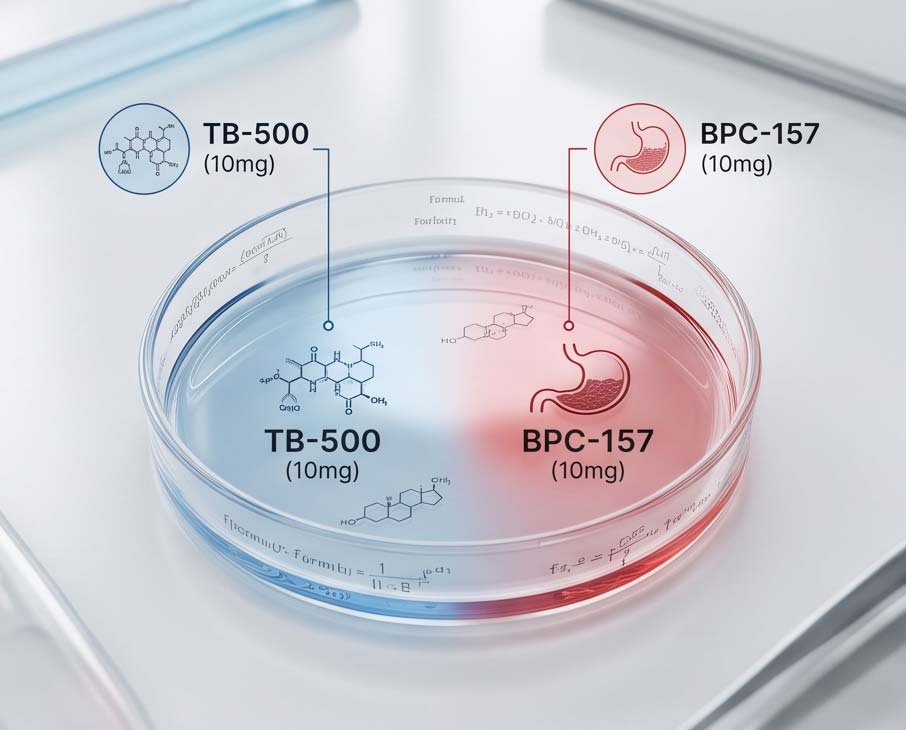
BPC-157: The Pentadecapeptide BPC-157 is a synthetic 15-amino-acid peptide (pentadecapeptide) derived from a protective protein found in gastric juice. In laboratory settings, BPC-157 is primarily studied for its role in promoting the healing of tendons, ligaments, and the gastrointestinal tract.
- Research Focus: Investigators utilize BPC-157 to observe its effects on the upregulation of growth hormone receptors and the promotion of angiogenesis through the modulation of VEGF (Vascular Endothelial Growth Factor).
- CellShift Standard: We provide BPC-157 in a highly stable lyophilized powder (10mg per vial) at >99% HPLC purity, ensuring that researchers are not introducing heavy metals or synthetic byproducts into their assays.
TB-500: Thymosin Beta-4 Active Fragment While BPC-157 operates heavily on vascular pathways, TB-500 (a synthetic version of the active region of Thymosin Beta-4) is studied for its role in cellular structural integrity. It is an actin-binding protein, meaning it regulates the building of cells and influences cellular motility.
- Research Focus: In in vitro models, TB-500 is utilized to study cellular migration, the reduction of inflammation cytokines, and the remodeling of extracellular matrices.
- CellShift Standard: Supplied in 10mg vials, our TB-500 meets the >99% purity threshold required for highly sensitive cellular motility assays.
Conclusion For laboratories designing comprehensive tissue remodeling studies, the parallel investigation of BPC-157 and TB-500 offers a broad view of both vascular and structural regenerative pathways. CellShift Labs guarantees the consistency of these materials from batch to batch, safeguarding your experimental timelines.