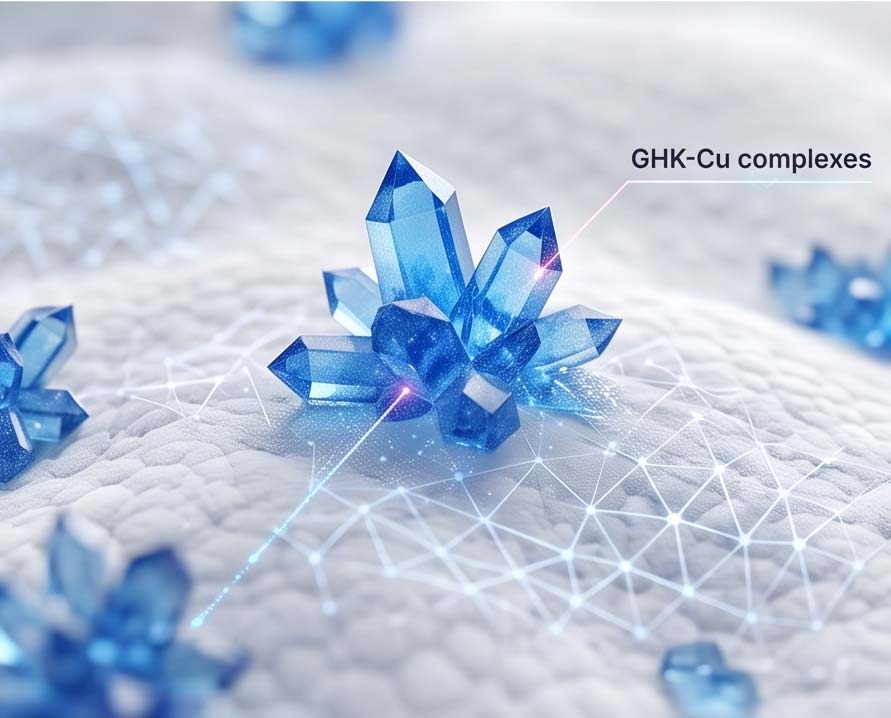
The Intersection of Metal Ions and Peptides Peptide complexes that incorporate metal ions are generating significant interest in the fields of dermatology, tissue engineering, and anti-aging research. At the forefront of this category is GHK-Cu, a naturally occurring copper complex of the tripeptide glycyl-l-histidyl-l-lysine.
Mechanisms of Action in Cellular Models GHK-Cu has a uniquely high affinity for copper, a trace element essential for various cellular functions. In a laboratory environment, providing cells with GHK-Cu rather than free copper ions allows researchers to study highly targeted biological pathways without inducing copper toxicity.
Researchers currently utilize GHK-Cu to investigate:
- Extracellular Matrix (ECM) Remodeling: GHK-Cu is frequently applied to fibroblast cultures to observe the stimulation of collagen, elastin, and glycosaminoglycan synthesis.
- Gene Expression: Emerging in vitro microarray studies suggest GHK-Cu can modulate the expression of numerous genes related to cellular stress responses and tissue repair.
- Antioxidant Pathways: Studies frequently measure the compound’s ability to protect cultured cells from oxidative damage by regulating the activity of superoxide dismutase.
Engineered for Reproducibility Because trace metal contamination can easily ruin delicate in vitro experiments, sourcing ultra-pure GHK-Cu is paramount. CellShift Labs provides Copper tripeptide-1 complex in a generous 100mg vial size, synthesized and purified to >99% (HPLC). This research-grade material allows academic institutions and independent researchers to confidently explore the vast potential of peptide-metal complexes in cellular signaling.