Beyond Nuclear DNA: The Rise of MDPs For decades, cellular research focused almost entirely on the nuclear genome. However, recent breakthroughs have highlighted the importance of the mitochondrial genome—not just in producing ATP, but in encoding functional peptides that regulate metabolism. These are known as Mitochondrial-Derived Peptides (MDPs), and MOTS-c is currently at the cutting edge of this scientific frontier.
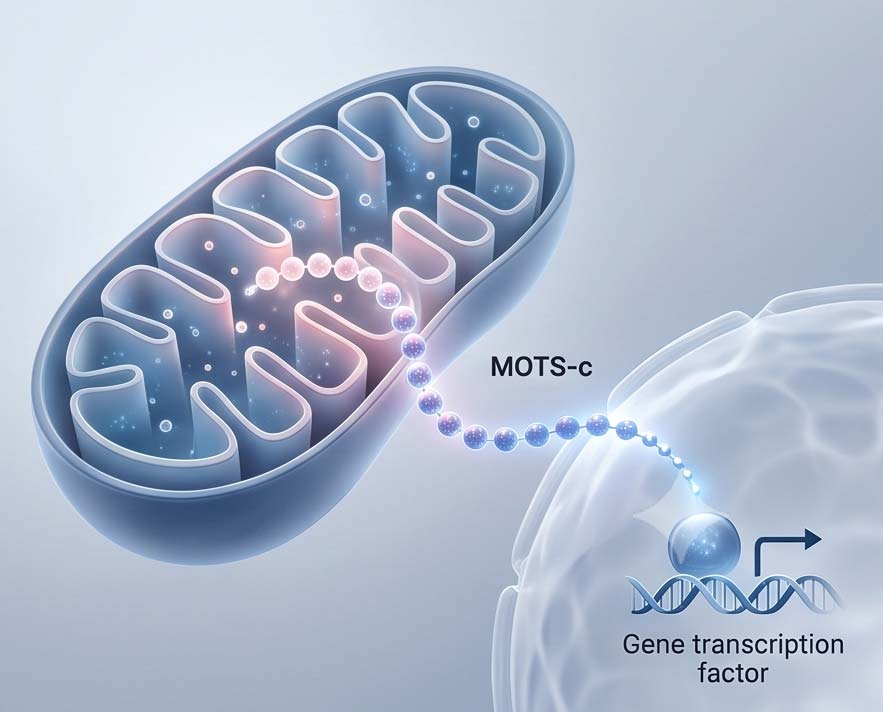
What is MOTS-c? MOTS-c (Mitochondrial Open Reading Frame of the 12S rRNA-c) is a 16-amino-acid peptide. Unlike traditional peptides that operate primarily on the cell surface, MOTS-c translocates to the nucleus to regulate gene expression in response to metabolic stress.
Laboratory Applications and Mechanisms Researchers are heavily investigating MOTS-c to understand how mitochondria communicate with the rest of the cell to regulate energy. Key areas of in vitro study include:
- AMPK Activation: MOTS-c is studied for its ability to activate AMP-activated protein kinase (AMPK), a master regulator of cellular energy homeostasis.
- Glucose Metabolism: Cell cultures, particularly skeletal muscle models, are treated with MOTS-c to observe changes in cellular glucose uptake and fatty acid oxidation.
- Senescence and Aging: Researchers are exploring how MDPs like MOTS-c protect cells against metabolic dysfunction associated with cellular aging.
Your Partner in Next-Generation Research Because MOTS-c is a relatively new and highly complex peptide, sourcing it from a reliable manufacturer is critical. CellShiftLabs is proud to provide research-grade MOTS-c in 10mg vials, verified to >99% purity by HPLC. We are dedicated to supporting the laboratories pushing the boundaries of metabolic and mitochondrial research by providing the ultra-pure materials necessary to turn hypotheses into reproducible facts.